

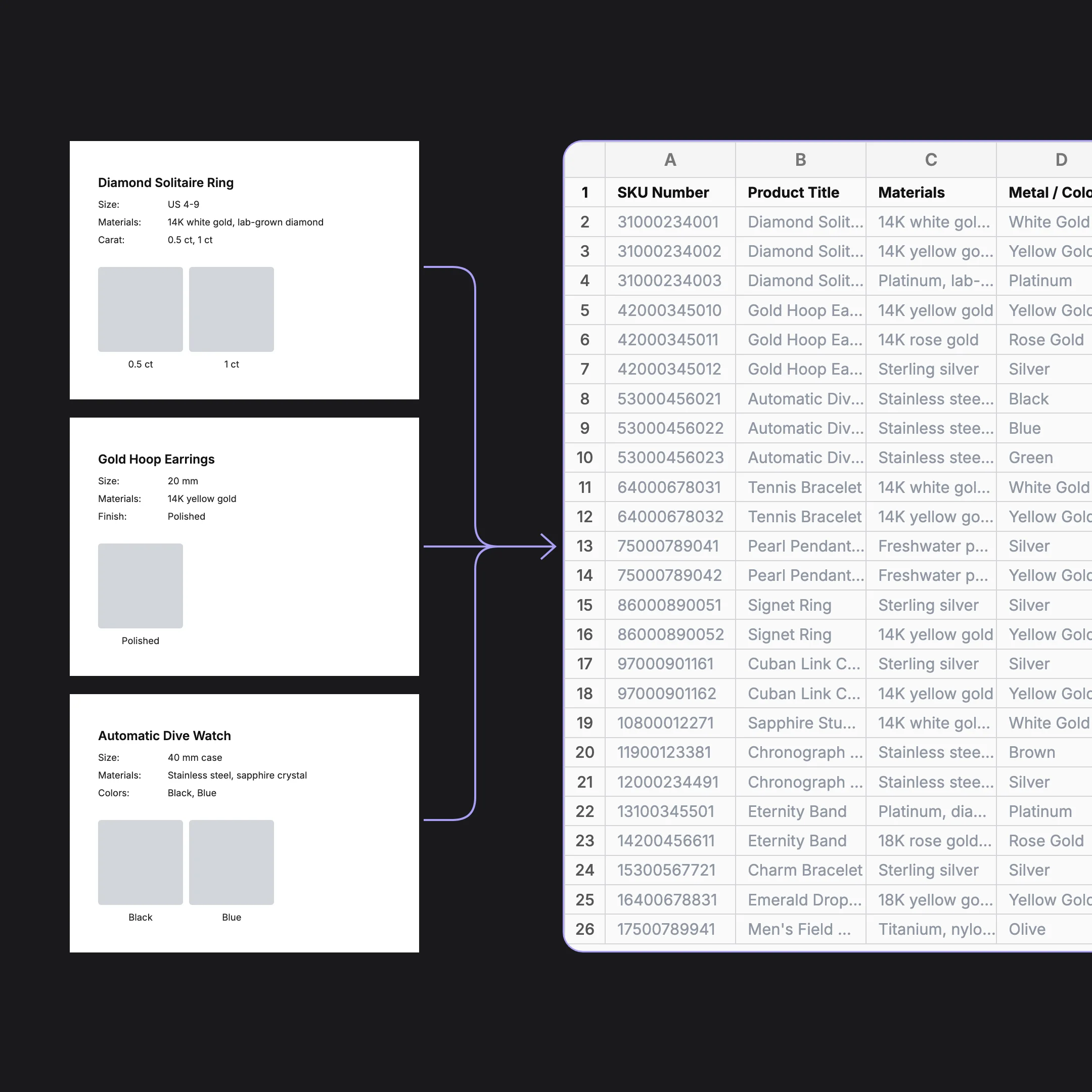
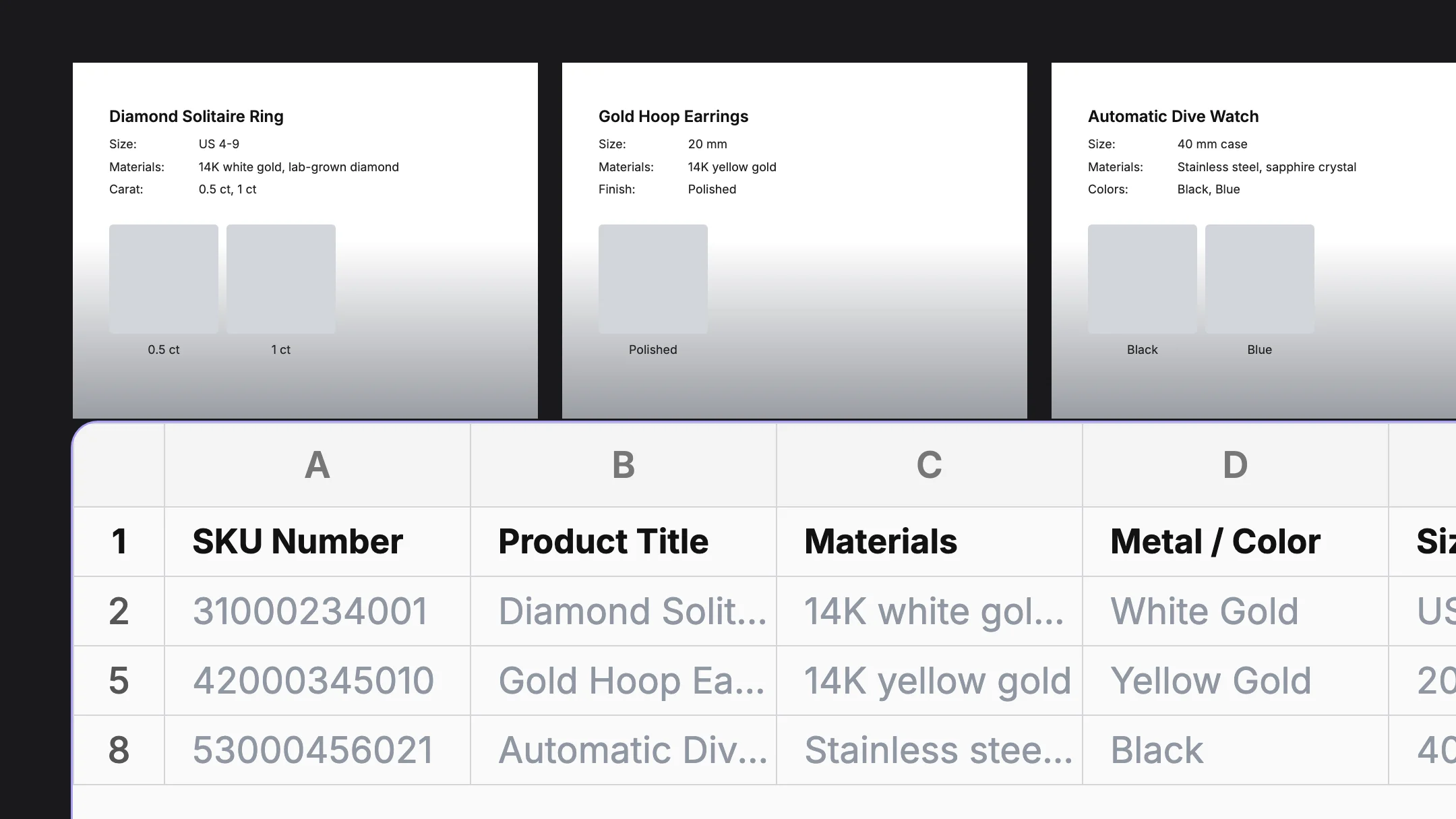








Complete and correct the details shoppers search for

Missing attributes like metal, purity, stone, cut and chain length are filled in from manufacturer sites, product images and any product information you already have, with the source shown for each value.
Values are standardized to the units and spelling you use. For example, "14kt" and "14 karat" both become "14K".
Spelling mistakes get corrected across every supplier file.

Categorize every piece into your taxonomy
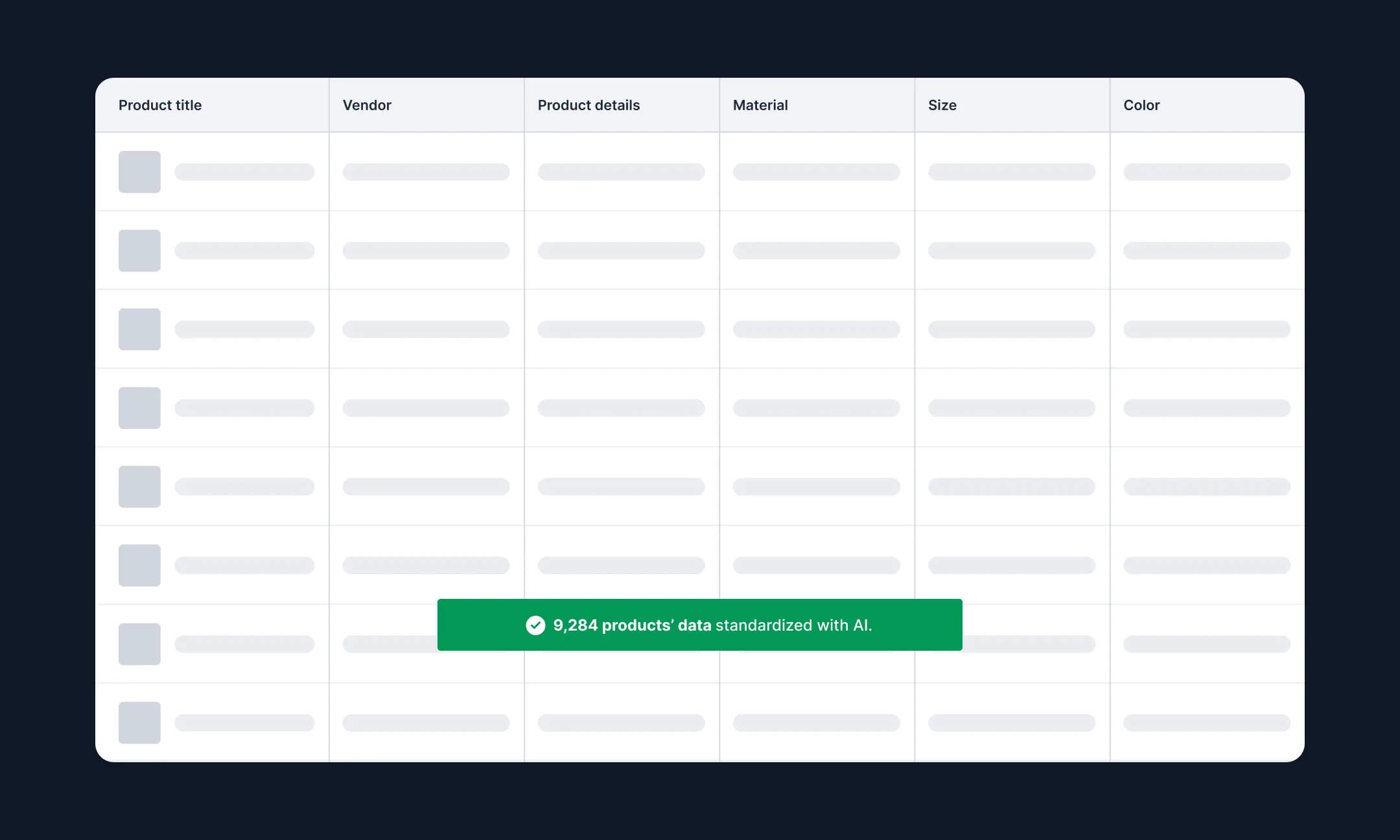
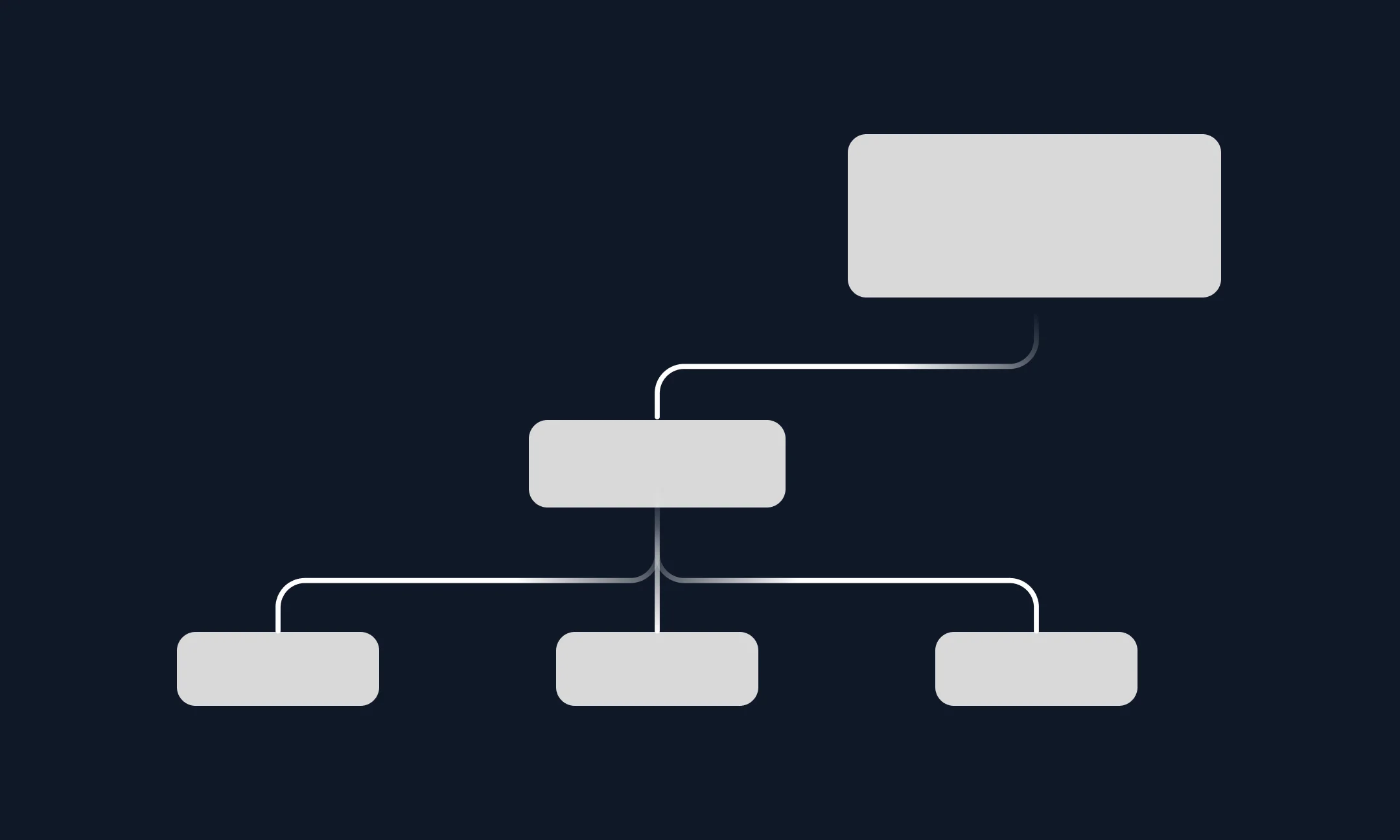
Rings, necklaces, earrings, bracelets and watches get categorized accurately, based on your own definitions.
Each category gets its own attributes. Ring size applies to rings, and chain length to necklaces.
Pieces with sparse data are enriched before they're categorized, so every SKU gets a category.
Write every listing in your voice
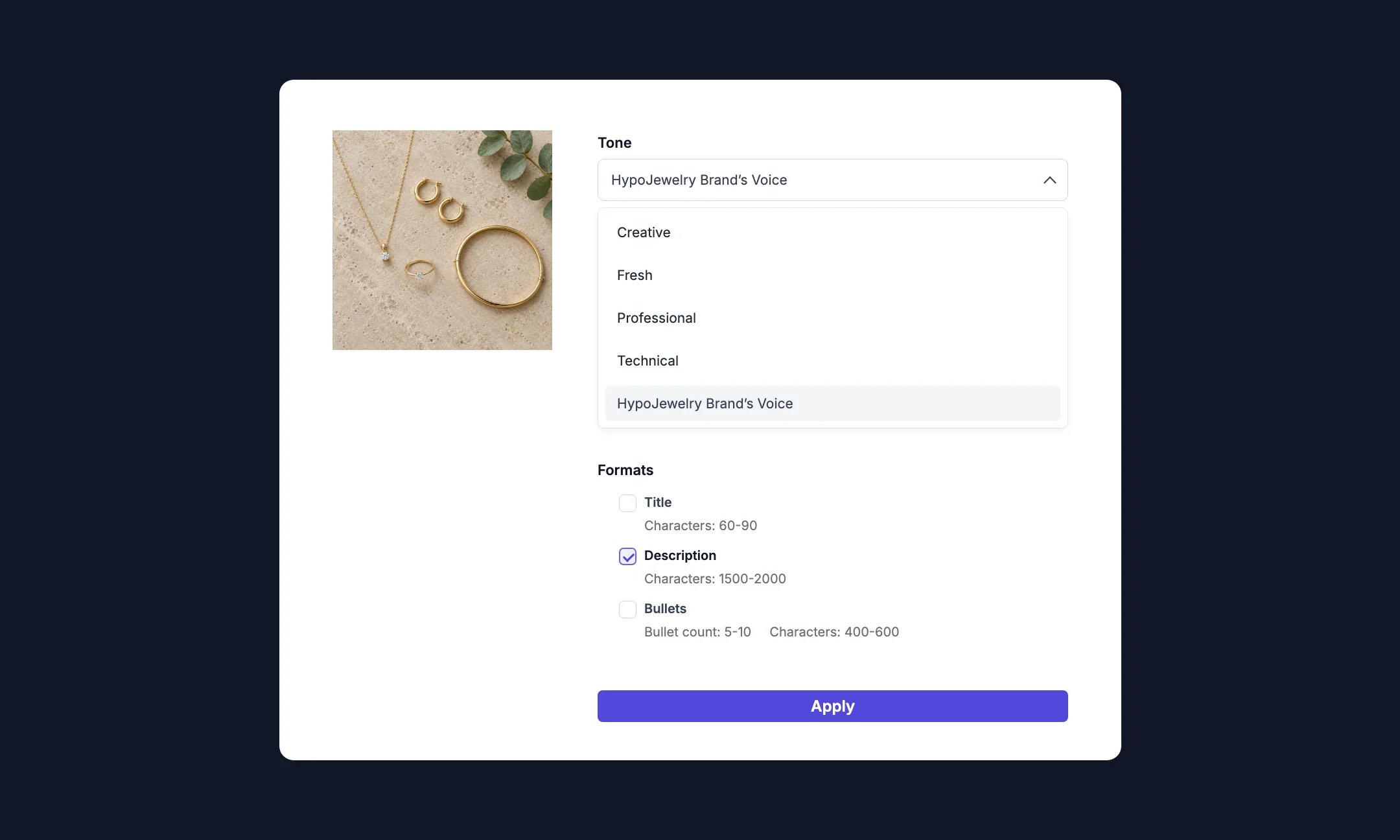
Titles, descriptions and bullets are written from your product data in your brand voice, and optimized for search engines and AI answers.
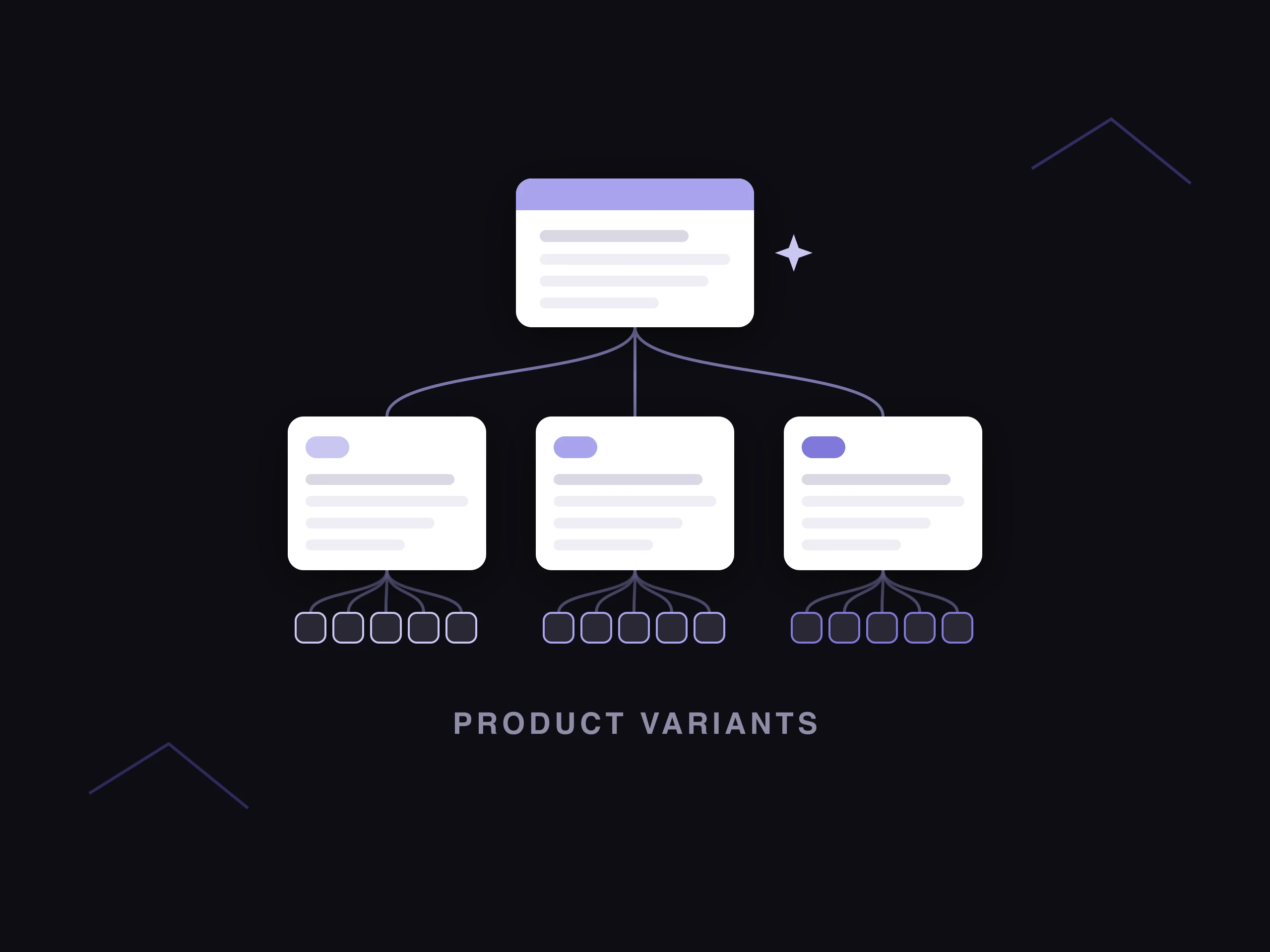
Each variant gets its own description, written from its own metal, stone and size.
Banned and required terms apply automatically, from how you describe a stone's origin to the words your brand never uses.
Check every claim before it goes live
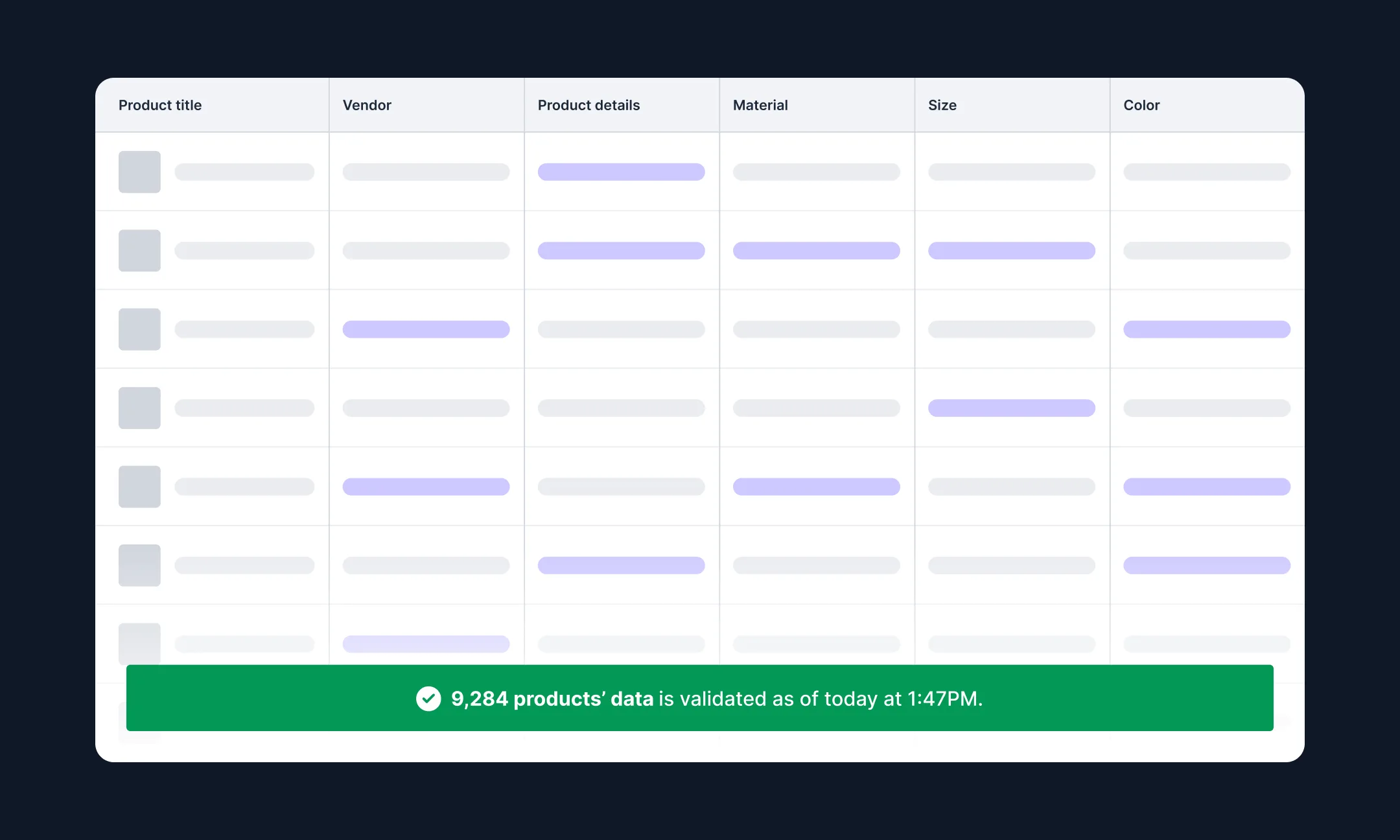
Set rules for the claims that matter in jewelry, such as requiring "lab-grown" next to any lab-created diamond.
Copy that contradicts the product's attributes is flagged, such as a description that says 18K when the metal field says 14K.
New products are checked as soon as they're imported, and live listings can be audited in bulk.
Edit every product photo in bulk
Backgrounds are removed and replaced in bulk to match your site's style.
Image resolution is enhanced to show stone detail and metal finish.
On-model and lifestyle shots are generated from your existing product photos.
Every piece ready to sell from day one


Frequently Asked Questions
What is a jewelry PIM?

A jewelry PIM (product information management system) keeps every piece's product data in one place: metal, purity, stones, sizes and images, along with the copy for each channel. Hypotenuse AI is an AI PIM for jewelry and watches. On top of storing product data, it fills in missing attributes and writes listings from it.
Which attributes matter most for jewelry and watch listings?
For jewelry, the details shoppers filter and compare on: metal type and purity, stone type, carat weight, cut, setting, and ring size or chain length. For watches, case size, movement, water resistance and strap material. Hypotenuse AI fills these in from manufacturer sites, product images and any product information you already have, and standardizes them to the units and spelling you use.
How does Hypotenuse AI keep jewelry listings accurate?
You set rules for the claims that matter in jewelry, and every listing is checked against them and against its product data before it goes live. For example, the FTC Jewelry Guides call for a clear qualifier, such as "laboratory-grown", when a diamond is not a mined stone. A listing that describes a lab-grown stone without it is flagged, as is copy that says 18K when the metal field says 14K.
Can Hypotenuse AI write different copy for each metal or stone variant?
Yes. Each listing is written from scratch from that variant's own product data, and every variant's data is slightly different, so every variant gets unique copy.
How do we move our jewelry catalog into Hypotenuse AI?
Import your existing product data as CSV or XLSX files in your own format, or connect the systems you already use, such as Salsify or NetSuite. Hypotenuse AI then fills in missing attributes and standardizes values across the catalog. Every team also gets a dedicated onboarding session.
Explore insights on product data for jewelry and watches


What is product data enrichment and why does it matter?
Product data enrichment helps enrich your product data with relevant information automatically pulled from the web. In this article, we'll discuss what it is, why it’s important for ecommerce brands, and how you can harness its power to level up your product pages.

